

Restoration

Restoration
TNC’s restoration body of work provides a platform for innovative scientific research, and for sharing lessons learned with researchers and practitioners throughout the world. The Dangermond Preserve is a living laboratory for restoration science and action, providing opportunities for public engagement and inspiration for local communities and students through impactful volunteering and learning.
Restoration is one of the key elements of the Dangermond Preserve’s vision of Preserve, Restore, Learn and Innovate.
TNC is advancing the restoration of the Dangermond Preserve’s diverse natural systems and processes. In just a few years, we have removed invasive ice plant to re-establish coastal prairie, dune headland, and wetland habitats, converted a parking lot to coastal shrubland, and restored former agricultural lands to native oak woodlands. On Jalama Creek, which winds through the preserve, we have already removed two human-built fish passage barriers—opening up 13 miles of upstream habitat for the critically endangered Southern California steelhead trout and other species like Southwestern pond turtles and California red-legged frogs. TNC’s restoration work is based on the best available science and management practices, state-of-the-art technology, and an adaptive management approach.
Why Restoration?
“Ecological restoration makes the world a bit better, healing the scars on the land caused by past human practices. A restored landscape returns balance to the plant and animal communities that depend upon it, bringing back the ecosystem services needed to support people and nature.”
– Laura Riege, Restoration Manager, Dangermond Preserve

A Living Laboratory
At the Dangermond Preserve and across TNC’s preserve network, we partner with scientists and conservationists from around the world to restore, manage, and study ecosystems—ensuring our preserves are hubs for research and discovery. We prioritize research and stewardship that can be scaled and use the results of science-driven management experiments to further refine our actions to improve biodiversity outcomes and climate resilience.
At the Dangermond Preserve, we’re using different techniques to remove ice plant, and study the responses of habitats to ice plant removal. Researchers from University of California, Santa Barbara are asking what are cost effective ways to remove ice plant at a landscape scale, what is the response of headland dunes to the removal of ice plant, and can we detect the extent and spread of ice plant using remote sensing data?
Working with the California Native Plant Society, we are conducting research on how to assess the population of a small, rare plant—the Gaviota tarplant—across 1,200 acres annually, and asking how to do so cost effectively. The species is known to have wide ranges in population size from year to year, which makes managing land for the recovery of this plant even more challenging.
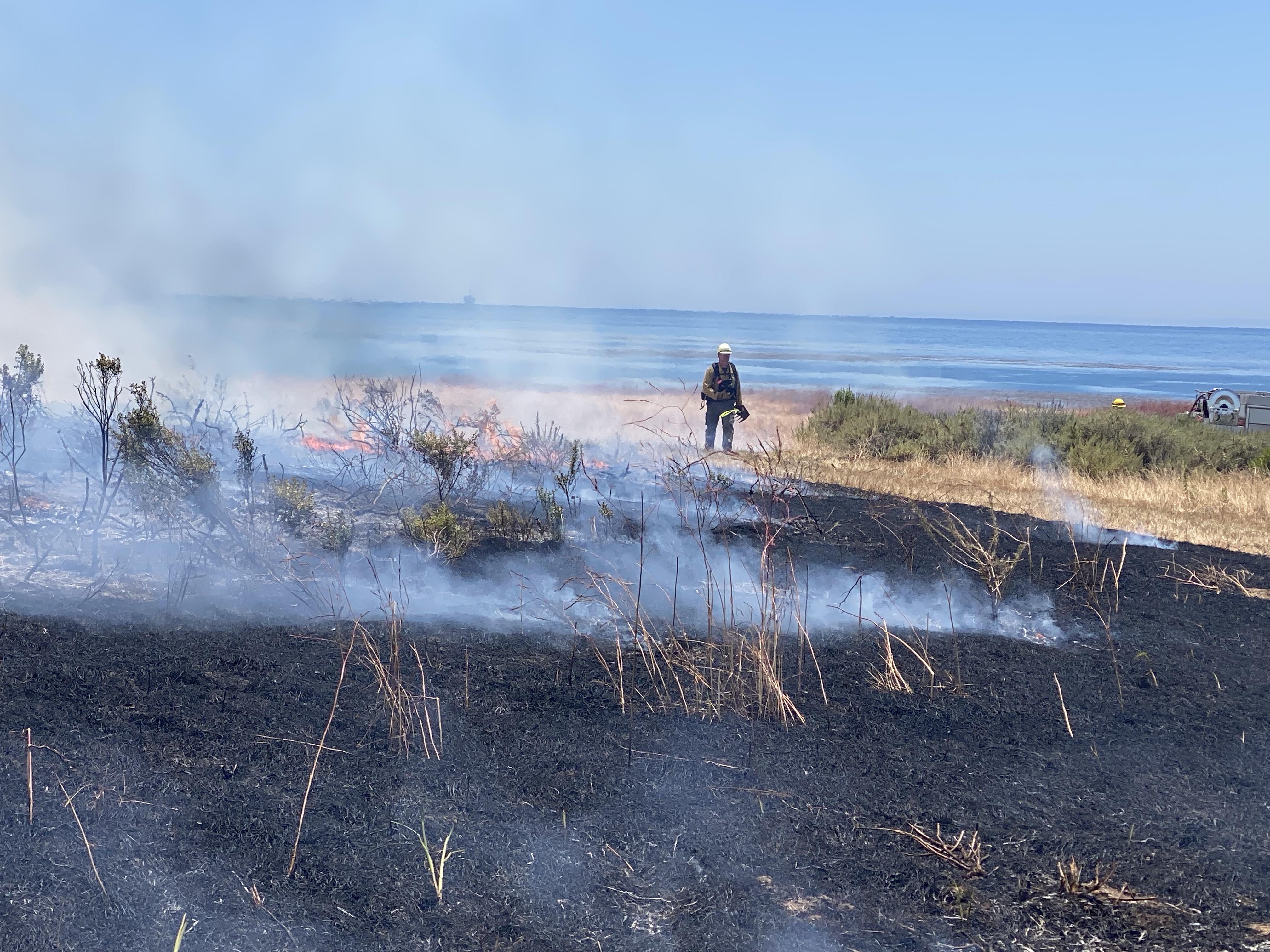
Along with researchers from Cal Poly San Luis Obispo and other partners, TNC is conducting research on the use of beneficial fire for restoration on the Central Coast, such as seeking empirical data to quantify how plant communities respond to prescribed fire treatments. Check out the Dangermond Preserve’s Fire Management Plan here.
Steelhead Stronghold
With 95% of the Jalama Creek watershed in Dangermond Preserve, TNC is working to restore ecosystem processes at a landscape scale. Historically, Jalama Creek supported a thriving steelhead run, but two major barriers—remnants of the preserve’s ranching era—blocked fish from accessing upstream spawning grounds for over 50 years. Smaller barriers, such as road culverts and agricultural dams, further disrupted the natural flow of water and sediment, severing the connection between streams and their estuaries. Southern California steelhead have not been observed in Jalama Creek since the 1990s.
TNC has already made significant strides in restoring the Jalama Creek watershed. With the removal of two major barriers, 13 miles of Jalama Creek are now open to support fish spawning and rearing. We are working to improve habitat for wildlife and adaptively manage cattle grazing—through efforts like using virtual fencing and strategically locating water troughs—to minimize trampling of stream banks and fish nests. Our monitoring and research efforts allow us to manage the habitat requirements needed to ensure the streams are healthy and supportive of native species, including the California red-legged frog and Southwestern pond turtle. Next, TNC is working to restore Escondido Creek, a tributary of Jalama Creek, by removing barriers and providing access to an additional mile of cold-water habitat to support the recovery of Southern California steelhead.
Read about TNC’s statewide Salmon and Steelhead Strongholds Initiative.
Explore TNC's efforts to restore Southern California steelhead habitat at Jalama Creek on the Dangermond Preserve.


Oak Woodlands
California’s iconic oak woodlands provide habitat and food resources for hundreds of plant and animal species. At the Dangermond Preserve, TNC has converted 150 acres of former agricultural fields to oak woodland and savannah. Our Oak Restoration Dashboard provides a real-time, interactive snapshot of the locations of our oak restoration, including the number of oak seedlings that have been planted, what techniques were used, and how different oak trees fare over time.
Together with partners, TNC is studying the health of the preserve’s 6,000 acres of oak woodlands under shifting climate conditions and examining ways to promote natural oak tree recruitment. We are asking questions to help inform our restoration, such as “What are the abiotic factors that determine oak distribution on the preserve?” because we want these oak woodlands to be resilient in future climate conditions. Read more about this study published here.
In addition, our restoration science is focused on asking questions about what land managers can do to promote natural recruitment of oak trees on their lands, asking how the use of beneficial fire and cattle exclusion fences can help with this effort.
Restoration Map
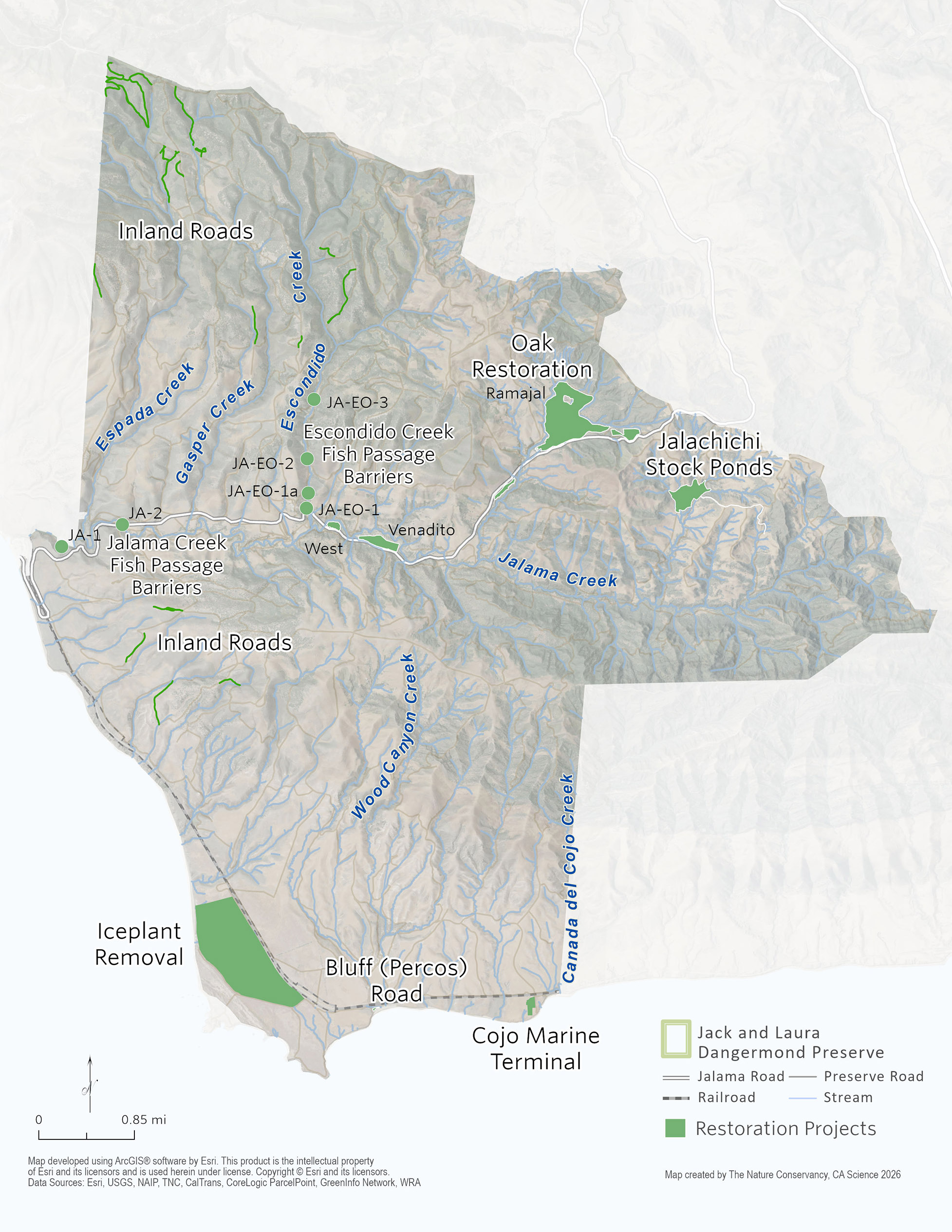
TNC’s restoration projects range in size and habitat from converting half an acre of a former parking lot back to coastal shrubs, to removing 1,200 acres of ice plant to re-establish coastal prairie, dune headland, and wetland habitats. Our work also aims to bring back culturally and ecologically important fish and wildlife, such as the critically endangered Southern California steelhead. We’re removing barriers to fish migration and restoring creek habitat to support this iconic species and others like Southwestern pond turtle and California red-legged frog. Click on the locations on the map to learn more about restoration projects at the Dangermond Preserve.
Restoring Ecosystem Processes at a Landscape Scale
TNC works across Dangermond Preserve to restore and manage natural resources. Check out our Integrated Resources Management Plan here.
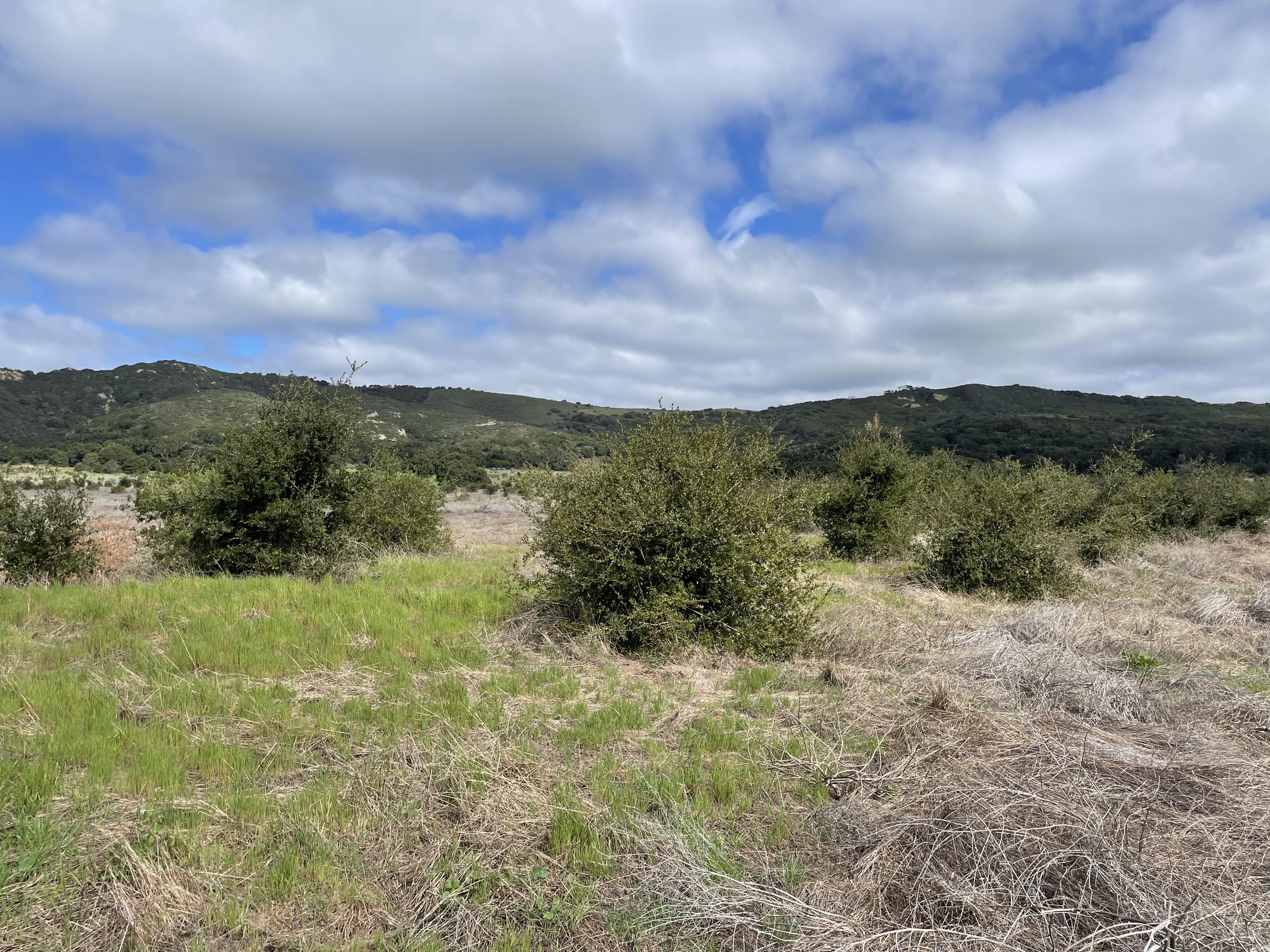
Returning Agricultural Lands to Oak Woodland
TNC has restored 150 acres of former agricultural fields to oak woodland and savannah, which has resulted in more nesting birds, acorns for food for birds and wildlife, and mountain lions caching their kills beneath the trees.
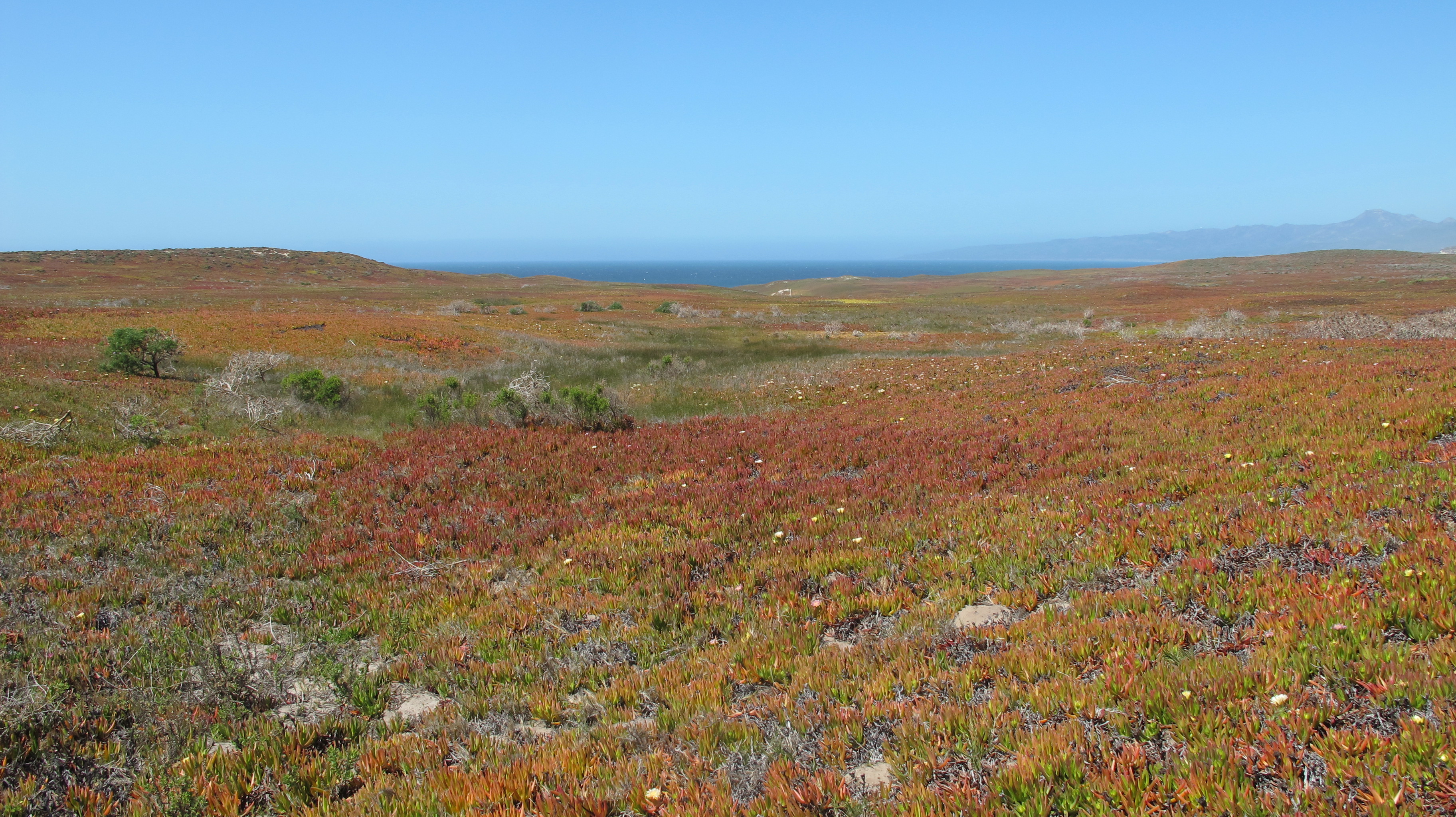
Eradicating 1,000 Acres of Ice Plant
TNC has been conducting a variety of different treatments to remove ice plant and prevent new weed invasions.
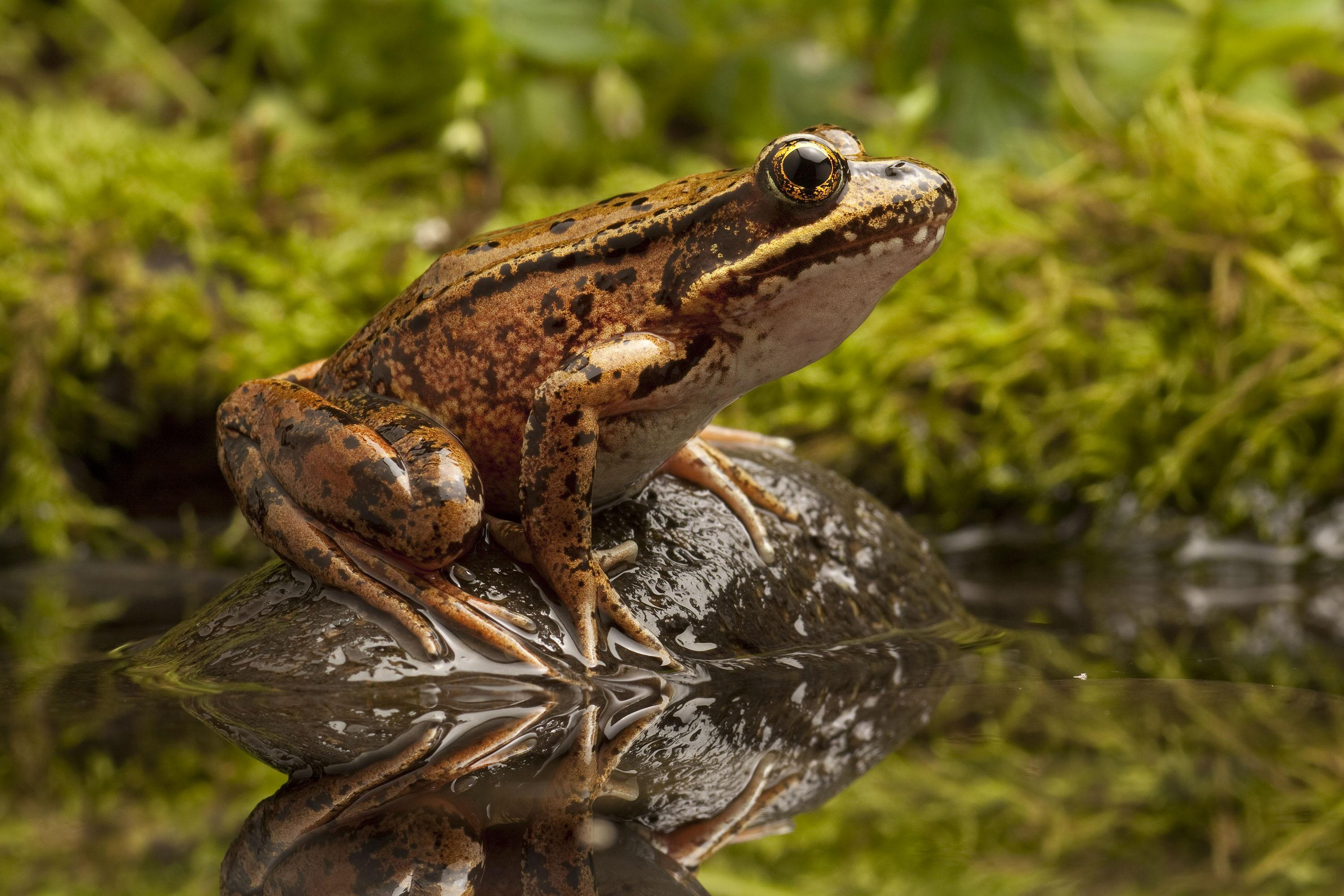
Restoring a Seasonal Creek
TNC is working to transform an artificial pond to a seasonal creek by undoing previous development. By doing so, we are improving habitat for the California red-legged frog and Western pond turtle.
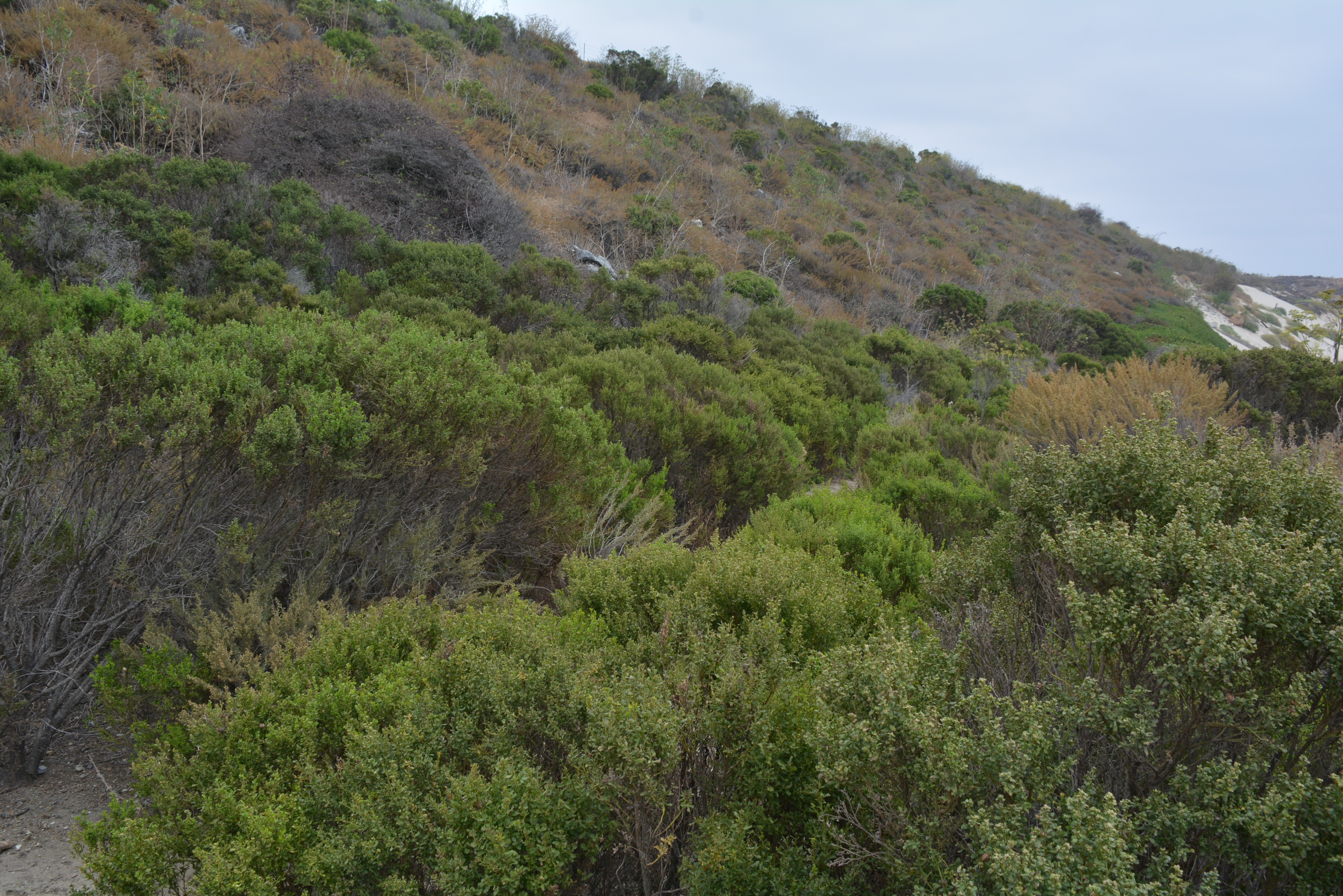
Unpaving Paradise and Taking Out a Parking Lot
TNC has restored to beautiful native coastal scrub habitat an area that was previously used for parking and overrun with weeds.
Restoring a Coastal Terrace
TNC is testing the use of prescribed fire in restoring an area invaded by non-native weeds. By doing so we are improving habitat for native species like the Gaviota tarplant.
Healing Scars on the Land—Inland Roads
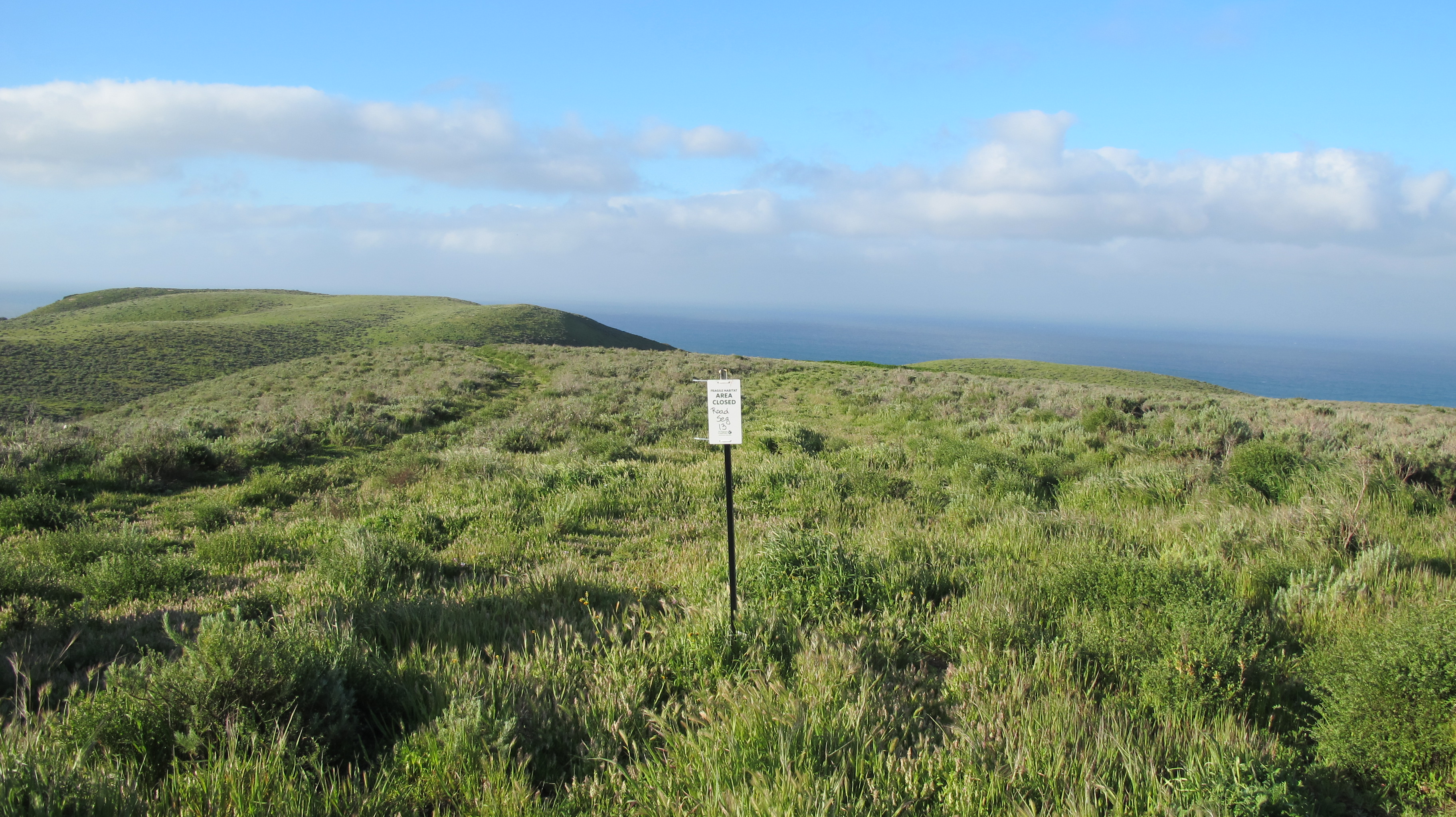
At Dangermond Preserve, TNC closed areas that were bulldozed to make roads, leaving these areas to return to their natural state.
Restoring Migration Corridors
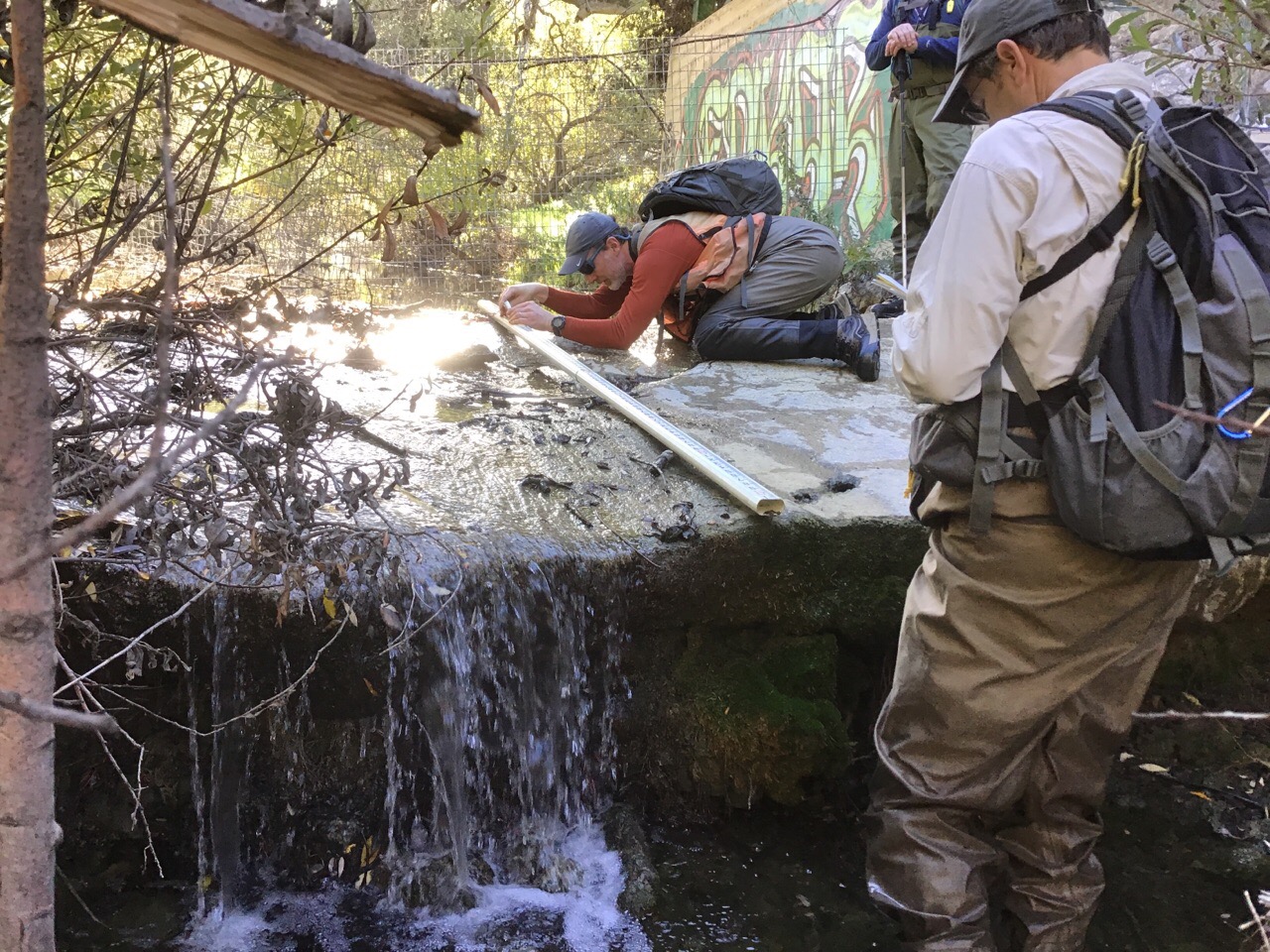
To date TNC has removed two barriers to fish passage in Jalama Creek, providing 13 miles of upstream fish habitat to support the recovery of the critically endangered Southern California steelhead.
Restoring Migration Corridors
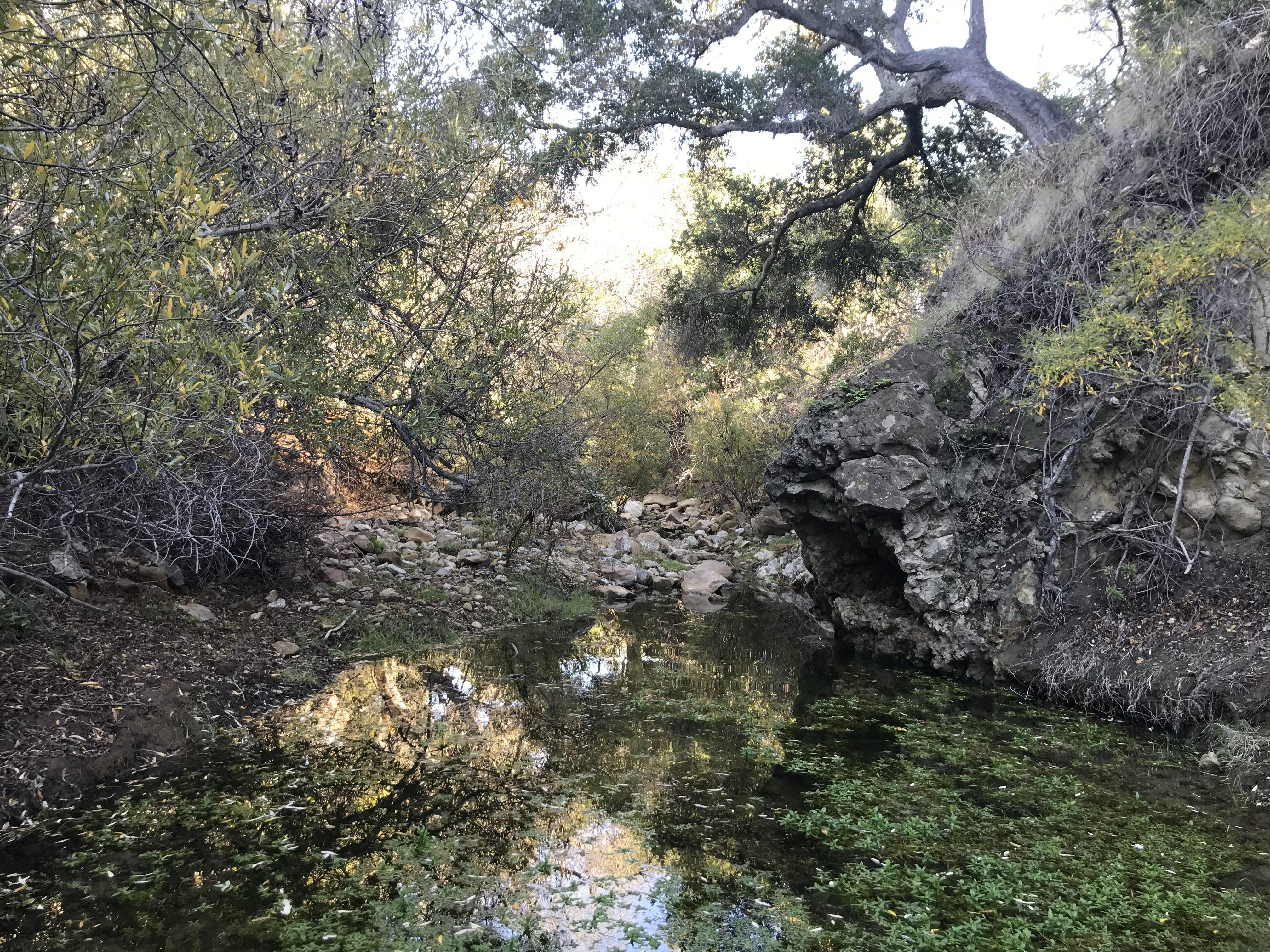
TNC is working to remove fish passage barriers on Escondido Creek to provide access to an additional mile of year-round cold water habitat to support recovery of the critically endangered Southern California steelhead.

 RETURN
By learning about and supporting TNC’s restoration efforts at the Dangermond Preserve, we can all help to ensure that California’s biodiversity thrives and that nature and people are more resilient to climate change.
You May Also Like

Volunteer at Dangermond!
Are you passionate about California’s wild coast ecosystems and restoring and protecting biodiversity? Learn more!

The Crown of the Coast
A landmark deal protects one of the last perfect places on California’s shore.

The Jack and Laura Dangermond Preserve
The last wild expanse of California coastline becomes a living laboratory.
